Darko Fritz & grey) (area . space for contemporary and media art – Korčula, Croazia per la sezione Trans Adriatic Grey Area.
Renato Bianchini, Mauro Bianchini, Virginia Capoluongo, Denis Roio, Enrico Zimuel, Nicola Battista, Valerio Mancini.

Darko Fritz & grey) (area . space for contemporary and media art – Korčula, Croazia per la sezione Trans Adriatic Grey Area.
Renato Bianchini, Mauro Bianchini, Virginia Capoluongo, Denis Roio, Enrico Zimuel, Nicola Battista, Valerio Mancini.
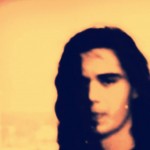
Hanibal
Live set with original electronic music. Hanibal lives in Berlin, a past singer and guitarist in various bands, composes electronic music since 2003.
He has published with labels like JopRec, iM Electronic, 7Seas Records and Kutmusic, in countries such as Germany, Hungary and Italy.
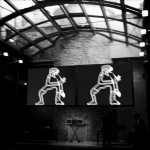
*** Pulsating Humanity – Live Visuals & Ultra Low Frequency Sound ***
Nexus (Rome): Drum & Bass (NeuroFunk/Techstep) / Dubstep DJ Set
Simone Zaccagnini (Berlin): Live Visual Art (2 Level Projection) In streaming over the Internet from Berlin
www.mixcloud.com/nexustunnel
www.simonezaccagnini.com

The Free Art and Technology Lab is an organization dedicated to enriching the public domain through the research and development of creative technologies and media. The entire FAT network of artists, engineers, scientists, lawyers, musicians and Bornas are committed to supporting open values and the public domain through the use of emerging open licenses, support for open entrepreneurship and the admonishment of secrecy, copyright monopolies and patents.

Association and dissociation of thought and action, as well as contemporary culture distortions, are at the center of Matteo Giordano’s work. Giordano investigates the tensions between the contemporary individual and the consumerist image in the context of the materiality of globalised society. His work focuses on the decline and decay of the culture he observes, in an effort to highlight this decline as a magnificent failure. Giordano is a member of the web collective R-U-In?S, a project initiated in 2009 as a call for collaboration and participation in a new form of critical visual practice, concerned with a set of future-driven, embodied, and often commercial aesthetics.
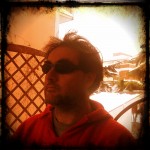
Nicola Battista (Pescara, 1971) is – in some of his identities and lives – dj, producer, record label manager, intellectual property consultant, journalist.
As Dj Batman, he has been active in music experimentation since 1988, beginning with cassette tapes and pause-button mixing and having his first official track released in 1995 by UK magazine “The Mix”.
His instruments are computers, vinyl, cassettes, shortwave radio and other non-conventional instruments.
Founder of the Kutmusic label, first Italian citizen signing a contract for selling mp3 music in USA in 1998; operator of online radios, distributing music to virtual worlds since 2008.
Jay Artworx is one of his several split personalities, each well defined in a different role. Some of his work include digital
manipulation of photos and other graphic elements.
“ExPorn” is a project focusing on concepts like chic porn of the 1970s and 1980s, copyright law and digital photo manipulation. The source material are posters and video tape covers of famous or lesser known adult movies which fell into the public domain due to owners not respecting the formalities of US copyright law.
Jay Artworx edited the music video for Dj Batman track “The Ghost of Anna El-Tour”, using footage from the 1924 Russian movie “Aelita” by Yakov Protazanov.
The video was successfully premiered in Moscow in 2011 at the Multimedia Art Museum during the “Cycles & Seasons” event.

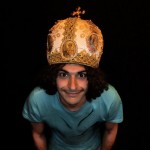
Luca Lo Coco was born in Palermo in 1985. After his well known Net.art website www.ashartonline.com, his artistic search explores the border between reality and virtuality.
In Luca’s artworks Internet is viewed like a tank of sharing culture. The young artist turns his steps towards The Hacker Ethic. By promoting a more conscious utilization of the web, Luca’s works often contribute to the fight for the Internet Rights.
Nowdays Luca is also investigating a possible relation between Karate and Classical Dance.
ph Mariangela Insana
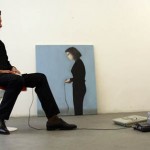
Born in Athens, Greece, Miltos Manetas moved to Milan at the age of 20. In 1995 he was included in Traffic, the survey exhibition curated by Nicolas Bourriaud that helped to launch the Relational Aesthetics art movement.
Manetas was categorized as one of artists of that movement in the catalogue of the Traffic show and later, in Bourriaud’s book Relational Aesthetics. But at this time, Manetas decided to change his approach to art, abandoning performance, objects and site specific installations, and he began making paintings about computer technology, exploring the possibilities of creating art by using video games and the Internet.
In 1996, Manetas moved to New York City and began working on a series of video game-related artworks, using Lara Croft and Mario as “ready-made” characters. In SuperMario Sleeping, a video from 1998, Mario sleeps under a tree, while in Flames, a 1997 video, Lara Croft is constantly getting hurt. Both works were exhibited at the Institute of Contemporary Arts, in the exhibition entitled Made in Italy. It was at that occasion that The Guardian published an article on Manetas calling him the El Greco of the Geeks.
In subsequent years, Manetas displayed exhibitions throughout the world. Another important show was Elysian Fields at Centre Georges Pompidou in Paris, curated by the Purple Institute.
Manetas then commissioned a California branding agency to come up with a new term that would bring a radical change to his work. In spring of 2000, Manetas presented the new name, Neen, to an exhibition-performance held at the Gagosian Gallery in New York City.
Following this presentation, Manetas moved to Los Angeles, where he started his ElectronicOrphanage enterprise. He hired young people with experience in contemporary art and/or design, asking them to abandon what they were doing to test ideas for the Internet. In 2002, Manetas presented the Whitneybiennial.com, an online exhibition which challenged the 2002 Whitney Biennial show.
In 2007, London’s Hayward Gallery commissioned Manetas to do a special project around the idea of Existential Computing, a new term he was using for his practice.[17] During this show, Manetas met Malcolm McLaren and they participated together in a show that artist Stefan Bruggemann curated at the I-20 gallery in New York City in September 2007. Manetas’ work for this exhibition was a piece commissioned previously by Newcastle’s Baltic Centre for Contemporary Art and the British magazine Dazed & Confused for the Dazed & Confused versus Andy Warhol exhibition. It consisted solely of a URL written on the wall: “http://www.ThankYouAndyWarhol.com.
In 2009, Manetas together with curator Jan Aman, created the first ever “Internet Pavilion” for the Venice Biennale. As a part of this work, they invited ThePirateBay and the Piratbyrån activists to participate and make their first “Embassy of Piracy.”
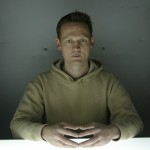
In his work Carsten Nicolai, born 1965 in Karl-Marx-Stadt, seeks to overcome a separation of art forms and genres for an integrated artistic approach. Influenced by scientific reference systems, Nicolai often engages mathematic and cybernetic patterns such as grids and codes, as well as error, random and self-organising structures.
After his participation in important international exhibitions like “documenta X” and the “49th and 50th Venice Biennial”, Nicolai’s works were shown in two comprehensive solo exhibitions at Schirn Kunsthalle Frankfurt, Germany (anti reflex), at Neue Nationalgalerie in Berlin, Germany (syn chron) in 2005, at Haus Konstruktiv, Zurich (static fades) in 2007 and at CAC, Vilnius (pionier) in 2011. He is represented by Galerie EIGEN + ART in Leipzig/Berlin, The Pace Gallery and Galleria Lorcan O’Neill in Rome.
Under the pseudonym noto Carsten Nicolai experiments with sound to create his own code of signs, acoustic and visual symbols. As alva noto he leads those experiments into the field of electronic music. Besides performing in club and concert halls, Nicolai presented his audio-visual pieces at museums like Solomon R. Guggenheim Museum in New York, San Francisco Museum of Modern Art, Centre Pompidou in Paris, Kunsthaus Graz or Tate Modern in London. Additionally he pursues projects with diverse artists such as Ryuichi Sakamoto, Ryoji Ikeda (cyclo.), Blixa Bargeld (anbb), Michael Nyman, Mika Vainio or Thomas Knak (opto). His latest musical project with Olaf Bender (byetone) is called diamond version and is released on mute records.


Debra Solomon is an artist and designer of food-system infrastructure.
In 2004, Debra Solomon began publishing her independent research on culiblog.org on food, food culture, and the culture that grows our food. Culiblog became an internationally recognized resource about food systems, sustainability, urban agriculture, food-related art/design, architecture, and urban planning.
Solomon’s early food-related work included a temporary concept restaurant exclusively serving micro-greens based up on the notion that even northern urbanites without access to land and light could produce a significant portion of their own food. In the project Lucky Mi Fortune Cooking together with food entrepreneurs from Rotterdam’s Afrikaanderwijk and the Freehouse Collective, she set up a free kitchen that ‘super-used’ the surplus from the bi-weekly outdoor market as well as other existing products, infrastructure, expertise, and facilities.
In 2007 Solomon co-curated the Edible City (NAi-Maastricht) on food and the built environment and was food domain expert of DOTT07, a design biennial in Newcastle (UK). In 2008 she was designer invitée of the design biennial in Saint-Etienne’s (FR) Cité du Design showing community tools for food and sustainability. Currently Solomon is working with Den Haag and Amsterdam neighbourhoods on projects that are radical visions for community involvement with food systems and urban agriculture. Read more on her weblog, www.culiblog.org.
Debra founded URBANIAHOEVE Social Design Lab for Urban Agriculture in 2010 to create examples of resilient urban food-system infrastructure in the public space.
– URBANIAHOEVE together with local participants creates foodscapes in the city by appropriating underused, under programmed and over-paved urban typologies.
– URBANIAHOEVE is developing a visual language that integrates urban food production into our public space.
– URBANIAHOEVE initiates, coordinates and programs structural forms of urban agriculture Den Haag and Amsterdam.
– URBANIAHOEVE develops new models for the public space that benefit our urban food production.
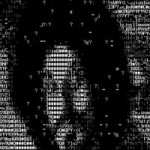
Jaromil aka Denis Roio is an artist, hacker and activist inspired by the “free and open source software” ethics; his artworks and theoretical publications focus on computer viruses, live poetry, ASCII art, digital video and independent media practices. He is also creator of the dyne:bolic operating system and more software applications commonly found on GNU/Linux/BSD distributions. In 2009 he was awarded with the Vilém Flusser Award.
exhibition presented by the grey) (area . space for contemporary and media art – Korčula, Croatia
curated by Darko Fritz / grey) (area for Lampo Net & Contemporary art Exhibition, D’Annunzio Room, Aurum, Pescara
artists:
Darko Fritz (Croatia / Netherlands): 204 NO CONTENT
Hrvoje Hiršl (Croatia): Reversible (Le temps detruit tout)
jaromil (Italy / Netherlands): ASCII Shell Forkbomb
Ivan Marušić Klif (Croatia): Synchronicity
Luigi Pagliarini (Italy): RAS Robot Art Soccer
Edita Pecotić (Croatia / UK): Temporary Internet Files
Edita Pecotić (Croatia / UK): Temporary Internet Files2
Davor Sanvincenti (Croatia): 1 0 0 1 revisited
Thomson and Craighead (UK): The Time Machine in alphabetical order, video